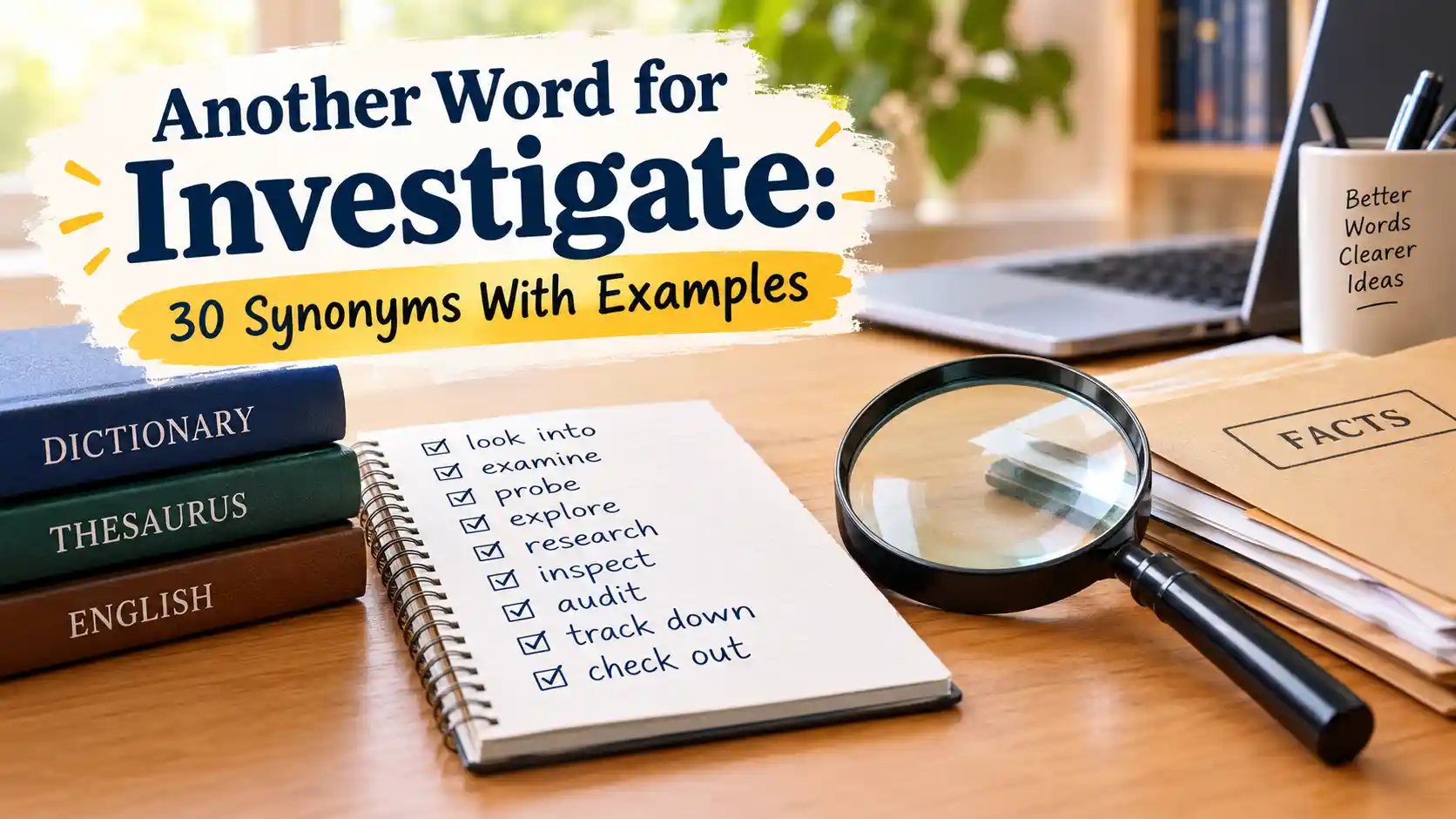
The closest everyday alternatives to “investigate” are look into, examine, probe, and check out. Use look into for a general inquiry, probe for a deep or official one, examine for a close look, and check out for a quick, casual check.
“Investigate” covers several kinds of looking for facts: police work on a crime, scientific study, checking a specific problem, and reviewing the conduct of a person or company. No single synonym fits all of them. The best alternative depends on how deep, how formal, and how official the inquiry is.
Quick list: look into, examine, probe, explore, research, inspect, scrutinize, audit, track down, check out
This article looks at 30 alternatives in detail, with meanings, IPA, usage notes, example sentences, and context. It also explains how investigate, examine, inspect, and research differ.
At a Glance: Investigate Synonyms and Related Alternatives
| Alternative | Part of Speech | Meaning | Register / Tone | Ideal Context |
| look into | phrasal verb | to inquire about something | neutral | complaints, problems |
| examine | verb | to look at closely | neutral to formal | evidence, health, study |
| probe | verb | to investigate deeply | neutral, news style | official inquiries |
| explore | verb | to look into possibilities | neutral | ideas, options |
| research | verb | to study systematically | neutral to formal | science, work, school |
| inspect | verb | to check for quality or faults | neutral | buildings, products |
| audit | verb | to officially check records | formal | finance, systems |
| track down | phrasal verb | to find after searching | informal | people, items |
| question | verb | to ask someone questions | neutral | witnesses, suspects |
| check out | phrasal verb | to look into something | informal | quick checks |
Which Word Should You Use?

| If you want to… | Use | Why |
| Describe police work on a crime | probe, look into | Both fit official or news-style reports. |
| Describe a quick check of a problem | check out | It sounds casual and fits small checks. |
| Describe scientific or academic study | research, analyze | They suggest careful, systematic work. |
| Describe checking for faults | inspect | It focuses on condition and quality. |
| Describe checking financial records | audit | It is the standard word for official checks. |
| Describe checking a person’s background | vet | It suggests careful screening. |
| Describe finding hidden facts | unearth, ferret out | They stress discovering what is hidden. |
| Describe asking people questions | question, interview, interrogate | They show how formal or intense the questioning is. |
Exploring the Multiple Meanings of “Investigate”
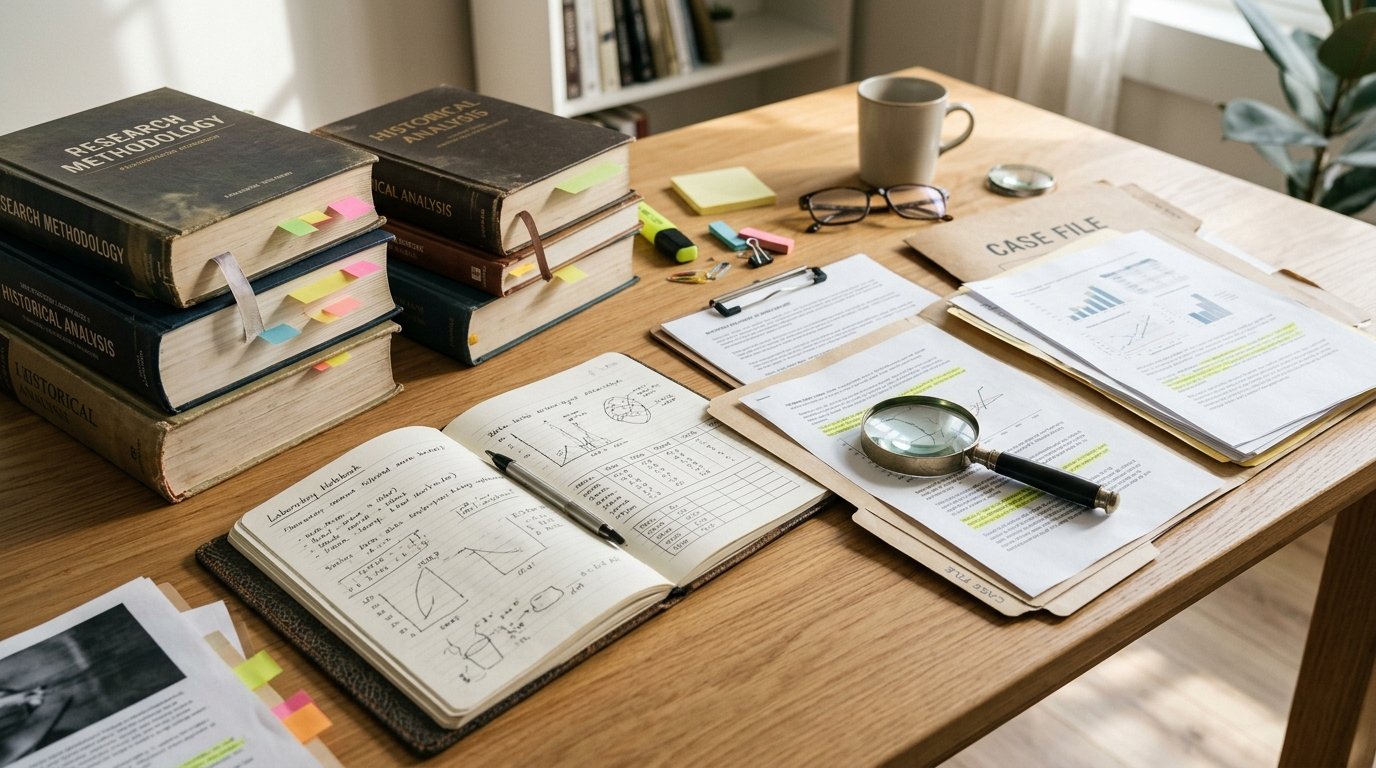
1. To Examine a Crime or Wrongdoing
- Meaning: To look for facts about a crime or a problem, usually officially.
- Explanation: This is the most common sense. The subject is often police, regulators, or other authorities.
- Example: Police are investigating the robbery.
2. To Study Something Systematically
- Meaning: To study a subject carefully in order to learn facts about it.
- Explanation: In science and academic work, “investigate” means careful, step-by-step study. It is close to research.
- Example: Scientists are investigating a new treatment.
3. To Look Into a Specific Problem or Question
- Meaning: To try to find out the cause of something or the answer to a question.
- Explanation: This sense is smaller and more practical. It is used at work and in daily life.
- Example: I’ll investigate why the website is so slow.
4. To Review a Person’s or Organization’s Conduct
- Meaning: To examine what a person or group has done, especially to find wrongdoing.
- Explanation: Journalists, regulators, and auditors use this sense. The target is often a person or company, not an event.
- Example: The agency is investigating the company’s finances.
Analyzing 30 Investigate Alternatives in Detail
Some of these words are close synonyms of “investigate,” and others are related alternatives that fit one kind of inquiry. The Usage notes make clear which is which.
Core Synonyms

1. Look into
IPA: /lʊk ˈɪntuː/ (US and UK)
Definition: To inquire about or examine something.
- Usage: A close, everyday synonym. It is neutral and less formal than “investigate,” and suggests a modest inquiry.
- Example: The manager promised to look into the complaint.
2. Examine
IPA: /ɪɡˈzæmɪn/ (US and UK)
Definition: To look closely in order to learn about something.
- Usage: A close synonym that is neutral to formal. It is used in medicine, law, and study, and can be less official than “investigate.”
- Example: Experts examined the evidence for weeks.
3. Probe
IPA: US /proʊb/ · UK /prəʊb/
Definition: To investigate deeply, often officially.
- Usage: A close synonym common in news writing. It suggests a deep or official inquiry. It is also a noun.
- Example: Officials will probe the cause of the fire.
4. Explore
IPA: US /ɪkˈsplɔr/ · UK /ɪkˈsplɔː/
Definition: To examine something in order to learn about it, or to look into possibilities.
- Usage: A related alternative that is softer and more open-ended. It fits ideas and options, not crimes.
- Example: The team will explore ways to cut costs.
5. Check out
IPA: /tʃɛk ˈaʊt/ (US and UK)
Definition: Informal. To look into or examine something.
- Usage: A casual alternative for quick checks. It also means to leave a hotel, a different meaning.
- Example: I’ll check out the noise in the garage.
6. Inquire into
IPA: US /ɪnˈkwaɪər ˈɪntuː/ · UK /ɪnˈkwaɪə ˈɪntuː/
Definition: To ask questions in order to find facts about something.
- Usage: A close, formal alternative, often used for official inquiries. British English also uses enquire into.
- Example: A committee will inquire into the cause of the delay.
Research and Study
7. Research
IPA: US /rɪˈsɜrtʃ/ · UK /rɪˈsɜːtʃ/
Definition: To study a subject carefully to find facts.
- Usage: A related alternative for systematic, often scholarly work. It is not suited to a quick check.
- Example: She is researching the history of the town.
8. Study
IPA: /ˈstʌdi/ (US and UK)
Definition: To examine or learn about something closely.
- Usage: A related, neutral alternative for learning. It is slower and less focused on finding hidden facts than “investigating.”
- Example: Scientists study how birds find their way.
9. Analyze
IPA: /ˈænəlaɪz/ (US and UK; British spelling analyse)
Definition: To examine something in detail to understand its parts.
- Usage: A related, formal alternative for data, results, and samples.
- Example: Doctors analyzed the blood samples.
10. Delve into
IPA: /ˈdɛlv ˈɪntuː/ (US and UK)
Definition: To search deeply into a subject.
- Usage: A related, formal or literary alternative for deep digging into records or topics.
- Example: The writer delved into old records.
11. Dissect
IPA: /dɪˈsɛkt/ (US and UK)
Definition: To examine something piece by piece; also, to cut open for study.
- Usage: A related alternative. In the figurative sense it means to analyze an argument or plan in detail.
- Example: Critics dissected every part of the plan.
Careful Checking
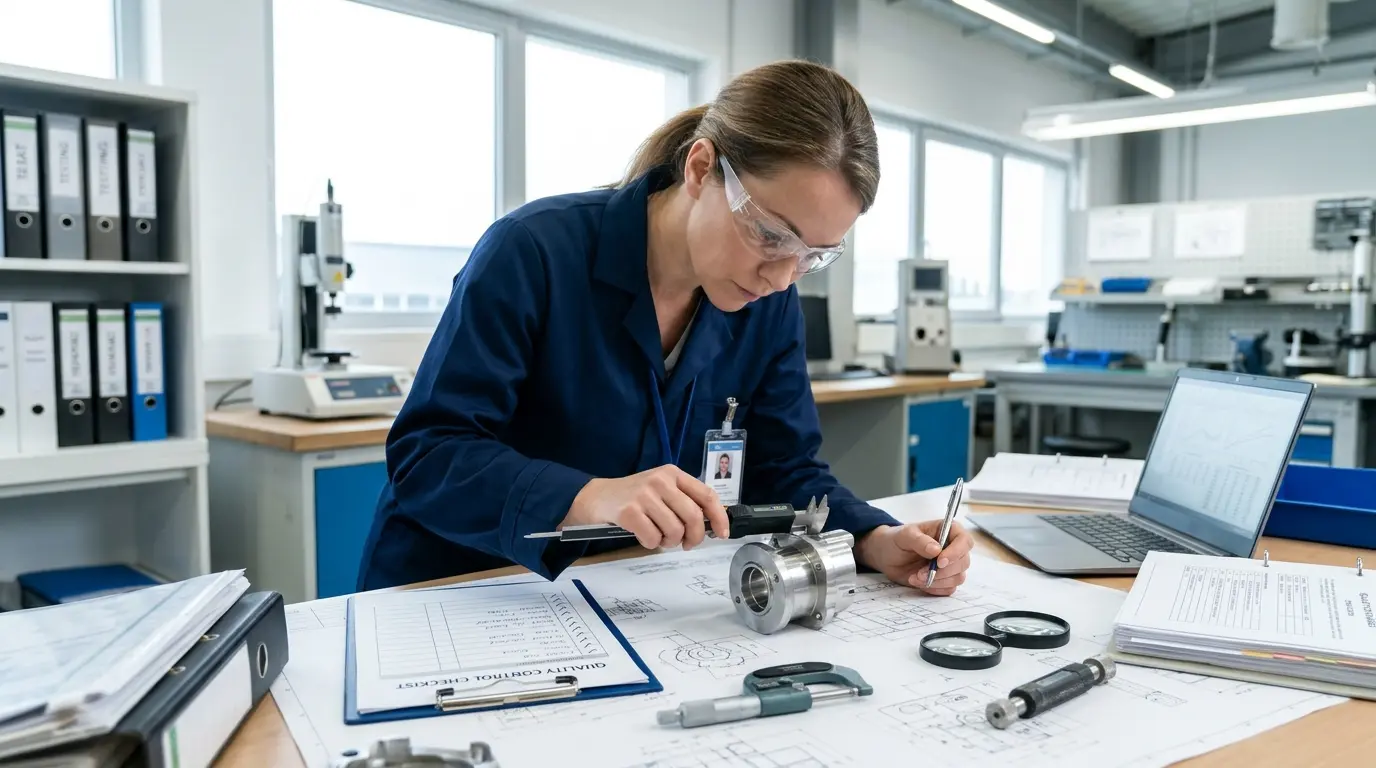
12. Inspect
IPA: /ɪnˈspɛkt/ (US and UK)
Definition: To look at carefully to check quality or find faults.
- Usage: A related alternative. It checks the condition, not unknown causes, so it is narrower than “investigate.”
- Example: The officer inspected the bridge for cracks.
13. Scrutinize
IPA: /ˈskruːtənaɪz/ (US and UK)
Definition: To examine very closely, often critically.
- Usage: A related, formal alternative that suggests careful and sometimes critical attention.
- Example: Lawyers scrutinized every line of the contract.
14. Audit
IPA: /ˈɔːdɪt/ (US and UK)
Definition: To officially examine accounts or records.
- Usage: A related, formal alternative for finances and systems. It suggests an official check against rules.
- Example: The tax office will audit the company’s accounts.
15. Vet
IPA: /vɛt/ (US and UK)
Definition: To check someone or something carefully before accepting them.
- Usage: A related alternative for checking a person’s background or a plan. It is informal to neutral.
- Example: The company vets all new employees.
16. Verify
IPA: /ˈvɛrɪfaɪ/ (US and UK)
Definition: To confirm that something is true.
- Usage: A related alternative that stresses confirming facts you already have, not discovering new ones.
- Example: The reporter verified the story with two sources.
Tracing and Uncovering
17. Trace
IPA: /treɪs/ (US and UK)
Definition: To find the origin or path of something by following clues.
- Usage: A related alternative for finding sources and origins. Etymonline notes the Latin root of “investigate” is vestigare (“to track, trace”).
- Example: Engineers traced the problem to a faulty wire.
18. Track down
IPA: /ˈtræk ˈdaʊn/ (US and UK)
Definition: To find someone or something after a search.
- Usage: A related, informal alternative that stresses the result, not the process.
- Example: She tracked down the owner of the lost bag.
19. Ferret out
IPA: /ˈfɛrɪt ˈaʊt/ (US and UK)
Definition: To discover something by persistent searching.
- Usage: A related, informal alternative for hidden facts.
- Example: The reporter ferreted out the truth about the deal.
20. Unearth
IPA: US /ʌnˈɜrθ/ · UK /ʌnˈɜːθ/
Definition: To discover something that was hidden.
- Usage: A related alternative that stresses the discovery.
- Example: Researchers unearthed new records about the case.
21. Sift through
IPA: /ˈsɪft θruː/ (US and UK)
Definition: To examine a large amount of material carefully to find something.
- Usage: A related alternative for piles of documents or evidence.
- Example: Detectives sifted through hundreds of emails.
Questioning People
22. Question
IPA: /ˈkwɛstʃən/ (US and UK)
Definition: To ask someone questions.
- Usage: A related alternative that applies to people, not things.
- Example: Police questioned the witness for an hour.
23. Interview
IPA: US /ˈɪntərvjuː/ · UK /ˈɪntəvjuː/
Definition: To ask someone questions, usually in a planned way.
- Usage: A related alternative for witnesses, experts, and jobs. It is neutral.
- Example: The reporter interviewed the neighbors.
24. Interrogate
IPA: /ɪnˈtɛrəɡeɪt/ (US and UK)
Definition: To question closely and formally, especially a suspect.
- Usage: A related, formal alternative. It suggests intense questioning.
- Example: Officers interrogated the suspect for hours.
25. Cross-examine
IPA: US /ˌkrɔs ɪɡˈzæmɪn/ · UK /ˌkrɒs ɪɡˈzæmɪn/
Definition: To question a witness in court to test their evidence.
- Usage: A related, legal alternative.
- Example: The lawyer cross-examined the main witness.
Informal and Figurative Alternatives
26. Snoop
IPA: /snuːp/ (US and UK)
Definition: Informal. To look around secretly or noisily.
- Usage: A related alternative with a negative tone. It suggests prying, not a proper inquiry.
- Example: He snooped through his sister’s desk.
27. Poke around
IPA: US /ˈpoʊk əˈraʊnd/ · UK /ˈpəʊk əˈraʊnd/
Definition: Informal. To look around casually.
- Usage: A related alternative for unplanned, relaxed searching.
- Example: We poked around the old shop for an hour.
28. Nose around
IPA: US /ˈnoʊz əˈraʊnd/ · UK /ˈnəʊz əˈraʊnd/
Definition: Informal. To look around, often in a nosy way.
- Usage: A related alternative that is informal and slightly critical.
- Example: Reporters nosed around the building.
29. Sleuth
IPA: /sluːθ/ (US and UK)
Definition: Informal. To investigate like a detective.
- Usage: A related alternative that is playful. As a noun, it means a detective.
- Example: She sleuthed her way through the old files.
30. Sniff out
IPA: /ˈsnɪf ˈaʊt/ (US and UK)
Definition: Informal. To discover something by searching, as an animal would.
- Usage: A related alternative for discovering secrets.
- Example: The paper sniffed out the scandal.
Investigate vs. Examine vs. Inspect vs. Research: What Is the Difference?
These words overlap, but each focuses on something different.
| Word | Focus | Typical Context | Example |
| investigate | finding facts or causes, often about wrongdoing | police, news, work | They investigated the fire. |
| examine | looking closely to understand | medicine, law, study | The doctor examined the wound. |
| inspect | checking condition or faults | buildings, products | He inspected the roof. |
| research | systematic study to learn facts | science, school, work | She researched the topic for a year. |
| audit | official check of records | finance, systems | They audited the accounts. |
| probe | deep or official inquiry | news writing | Officials probed the case. |
Use “investigate” when you do not yet know the cause or the facts. Use “inspect” when you already know what to check, and “research” when the work is a long, systematic study.
Investigate and Opposite/Paired Word Pairs
| Word | Paired Word | Note |
| investigate | ignore | The main opposite: not looking into something. |
| investigate | overlook | To miss or not notice something. |
| investigate | cover up | To hide facts instead of finding them. |
| investigator | suspect | A natural pair in crime stories. |
| investigation | trial | A stage pair: first the inquiry, then the court case. |
| investigate | report | A stage pair in news work: look into it, then publish. |
“Investigate” has no single perfect opposite. Ignore and overlook are the closest, and cover up is the opposite in effect when facts are being hidden.
Common Word Partners of “Investigate”
| Pattern | Common Partners | Example |
| investigate + noun | a crime, a death, a claim, a complaint, allegations | Police are investigating a robbery. |
| subject + investigate | police, authorities, regulators, scientists, journalists | Regulators investigated the bank. |
| adverb + investigate | thoroughly, fully, carefully, further, independently | The panel will investigate further. |
| investigate if / how / why | if, how, why, what | We need to investigate why it happened. |
| be investigated for | fraud, corruption, murder | He is being investigated for fraud. |
| worth investigating | worth investigating, needs investigating | The claim is worth investigating. |
Idiomatic Phrases Featuring “Investigate”
“Investigate” has no true idioms of its own. These are established expressions about investigating that native speakers use often.
1. Under Investigation
- Meaning: Being officially examined for possible wrongdoing or problems.
- Example: The company is under investigation for fraud.
2. Leave No Stone Unturned
- Meaning: To search or investigate thoroughly, trying every possible way.
- Example: Detectives left no stone unturned in the search for clues.
3. Get to the Bottom Of
- Meaning: To find the real cause or truth of something.
- Example: The mayor promised to get to the bottom of the problem.
4. Follow the Money
- Meaning: A saying that means finding the truth by tracing where money went.
- Example: To find the source of the fraud, they followed the money.
Word Formation of “Investigate”
Etymology & Structure
“Investigate” comes from Latin investigare (“to trace out, search after”; figuratively, “search into, investigate”). Etymonline explains that the Latin verb is formed from in- (“in, into”) and vestigare (“to track, trace”), which comes from vestigium (“footprint, track”). The origin of vestigium is unknown. In English, “investigate” is the Latin past participle investigatus, used as a verb, or it was formed from the noun “investigation.”
Date and History
Etymonline dates “investigate” to about 1500, as a back-formation from “investigation” or from the Latin past participle. Other dates include:
- Investigable (“that may be investigated”): about 1400
- Investigation, from Old French investigacion (14th century): early 15th century
- Investigator: 1550s
- Vestige, “a mark or trace”: about 1600
Word Class Variations
- Verb: investigate, investigates, investigated, investigating
- Noun: investigation, investigator
- Adjective: investigative, investigatory, investigable (rare)
- Rare related forms: investigatorial
Common Word-Choice Mistakes
- Police are investigating the crime: use investigating the crime.
- They will investigate the case: use investigate the case or look into the case.
- The police investigated him for ten hours: use questioned or interrogated (people are questioned, not investigated, in this sense).
- Please inspect the cause of the fire: use investigate the cause (inspect checks condition).
- I will research the noise in the kitchen: use check out or look into (research suggests long study).
- The company is under investigation: use under investigation.
- The detective snooped the evidence professionally: use examined (snoop suggests nosy prying).
Frequently Asked Questions
What is the closest synonym for “investigate”?
Look into, examine, and probe are the closest. Probe is the strongest and fits official inquiries.
What is a formal alternative to “investigate”?
Inquire into, scrutinize, audit, and examine sound formal. Choose by task: audit fits finances and scrutinize fits close, critical checking.
What is a casual alternative to “investigate”?
Check out, look into, and poke around are casual. They fit everyday problems.
What is a word for investigating in a nosy way?
Snoop and nose around suggest prying. Sleuth is a more playful word for detective-like investigating.
What is another word for investigating a crime?
Probe, look into, sift through, and track down are all used for crime work. Which you use depends on what is being done: searching, tracing, or examining evidence.
What is another word for investigating as a journalist?
Ferret out, unearth, and dig are common. They stress discovering hidden facts.
What is another word for investigating a person’s background?
Vet is the standard word for checking a person before hiring or accepting them. Verify fits confirming facts about them.
What is the opposite of “investigate”?
Ignore and overlook are the closest. Cover up is the opposite in effect when facts are hidden.
What are the noun and adjective forms of “investigate”?
The noun is investigation, and a person who investigates is an investigator. The adjective is investigative, as in investigative journalism.
Can “investigate” be used for people as the target?
Yes. People can be investigated for wrongdoing, as in he is being investigated for fraud. To ask a person questions, use questions or interviews.
Conclusion
The closest everyday alternatives to “investigate” are look into, examine, and probe. For quick checks, check out is the casual choice, and for deeper work, research and scrutinize fit best.
Context matters because “investigate” covers crimes, research, specific problems, and a person’s conduct. A word that fits one use can fail in another. Inspect checks condition, audit checks records, and snoop suggests prying.
To choose the right alternative, first decide what kind of inquiry you mean: official, scientific, practical, or about a person. Then match the word to your tone: casual, neutral, or formal.
Sources: Merriam-Webster; Collins English Dictionary; Dictionary.com; Etymonline
Haleema Sadia is an experienced content writer with three years of expertise in English vocabulary, synonyms, and word meanings. At TrueVisite, she creates clear, accurate, and reader-friendly content that helps people expand their vocabulary, understand word usage, and communicate with greater confidence. Her goal is to make learning English simple, practical, and accessible to everyone.